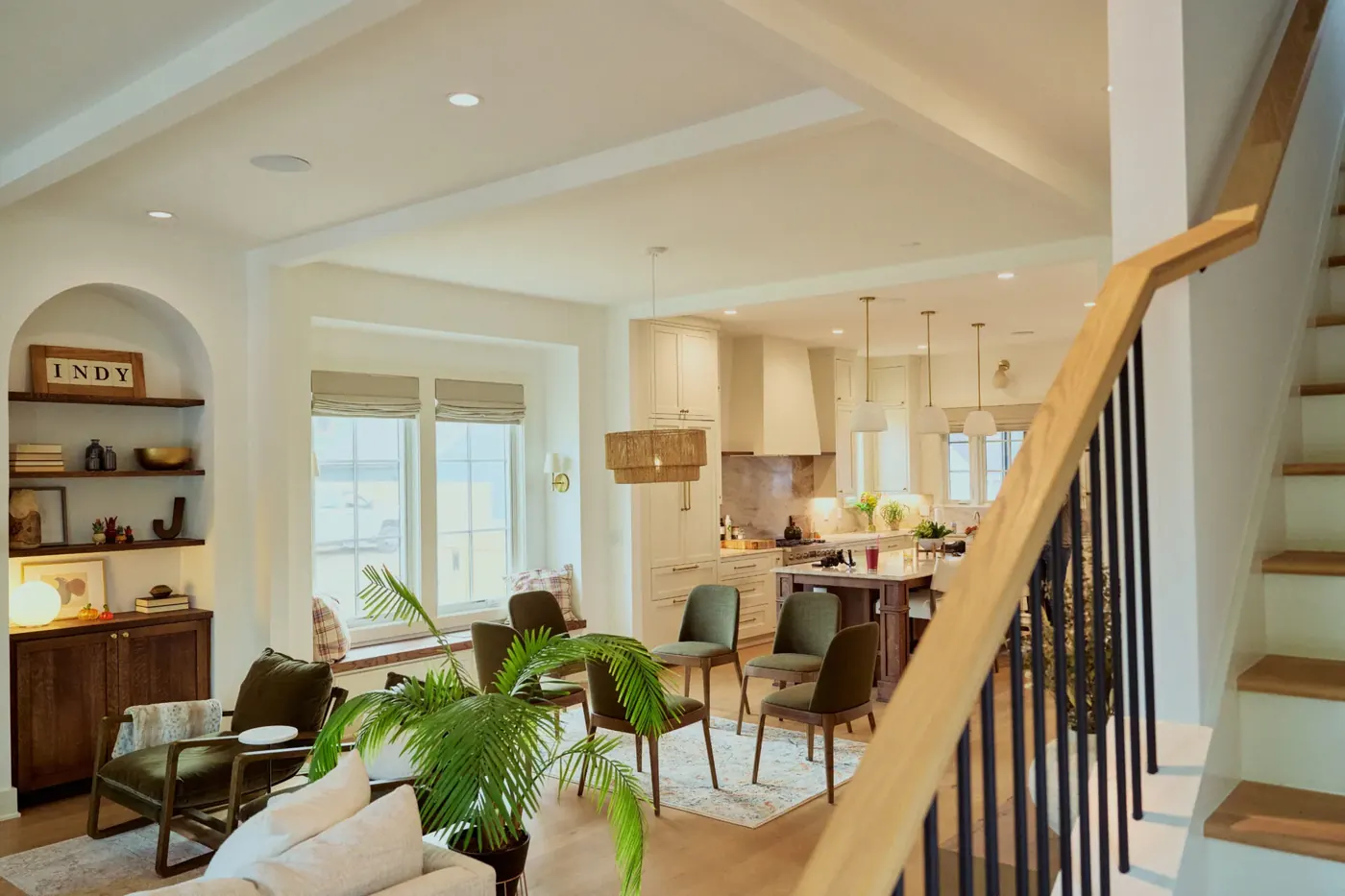
Window Treatment for Deer Run and the wildlife named streets
Custom New Palestine window treatment crews serving Deer Run and the wildlife named streets homeowners with free in-home measure, repair, replacement.
Houses in this part of New Palestine tend to share a few traits, and those traits shape what gets specified. The questions below cover what usually applies here and where individual openings still differ.
- Services: faux wood blinds, wood blinds, vertical blinds, aluminum mini blinds
- Service area: Deer Run and the wildlife named streets, New Palestine, IN and surrounding areas Two different timelines apply. New custom product takes weeks because it has to be made. Repairs to what's already hanging, a cord lock, a ladder string, a chain that jumped the clutch, are usually far quicker.
- Insured and bonded
- Serving New Palestine, IN since 2008
Local Window Treatment Experience in Deer Run and the wildlife named streets
If you own on Fallow Trail or Eland Drive, your window problem is on the back of the house. New Palestine's outer ring of subdivisions backs onto open cropland, and this cluster is that outer ring: no neighboring roofline, no mature canopy, nothing at all between your rear glass and a low sun that runs for hours. The town's tree cover is thin outside the 1838 plat anyway, because just over half its housing went up on Sugar Creek Township cropland where there was no woodland to retain. Street trees here are young and shade almost nothing. That's a solar specification problem before it's a decorating one.</p><p style="font-size:16px;color:#4a5a6a;line-height:1.75;margin:16px 0 0">The front of the house is a different job. Deer Run Drive, Caribou Circle and Hollyhock Court face into the plat with houses opposite, so privacy and glare there behave like any other New Palestine subdivision. The record puts these plans at ranch and two story traditional, 14 to 22 openings, with casing mixed by vintage. So a typical order here is really two orders: a solar package on the rear elevation where the cropland is, and an ordinary privacy and light package everywhere else. Pricing them as one number hides which half of the house is actually driving the cost.
We have served Deer Run and the wildlife named streets homeowners through the full range of window treatment needs, from inspections and repairs to full replacements. Whatever the system, our New Palestine crew approaches every project with clear communication and respect for your property.
Deer Run housing: the outer edge of the built up area
Build era for this cluster is not individually sourced. The Indiana statewide parcel layer verified the eight street names but carries no subdivision name field for Hancock County, and the county's assessor data sits behind Beacon and a GeoPower atlas with no queryable endpoint, so no per plat year built figure exists to quote. Deer Run also appears in the county subdivision index under both New Palestine and Lawrence, which means the name by itself doesn't identify the community. Town wide, New Palestine holds 1,326 housing units with a median year built of 2002 and 80.4% owner occupancy, and that is the honest reference until we're standing in the house.
Recorded styles are ranch and two story traditional, running 14 to 22 openings, with casing mixed by vintage and squareness not verified. Home count, lot size and price band are unsourced. What is specific to this cluster is position: it's the outer edge of the built up area, where the subdivision grid gives out. That has a direct effect on the rear elevation of every house on the outside row, and no effect at all on the ones facing into the plat from Redbird Trail or Tumbleweed Drive. Which row you're on changes the specification more than which plan you bought does.
The rear elevation is most of the job in Deer Run
Low angle sun is a different problem from overhead sun, and this cluster gets the low angle version with no relief. When lots back onto open cropland, light arrives close to horizontal in the last hours of the day and travels deep into the room, under the header rather than through it. An overhang does nothing about that. A 5% openness solar fabric that behaves at midday will glare at seven in the evening on a rear facing Fallow Trail great room. So openness gets specified by elevation here: 3% on the unshaded rear glass, 5% where there's a house or a tree opposite to do part of the work for you.
Fade is the second consequence, and it needs honest language. NFRC attributes 40 to 60 percent of fading damage to ultraviolet light. A solar shade or a lined drapery reduces that exposure. What no window covering can do is end the process, and any company that tells you otherwise is selling you a sentence rather than a product. On a Deer Run rear elevation with hours of direct exposure and no roofline in the way, that distinction is worth stating before the order rather than a year later, when the floor by the sliding door has gone lighter than the floor across the room.
Unshaded rear elevations, with nothing to interrupt them
This cluster is the outer edge of the built up area, so lots back onto open cropland. There's no neighboring roofline and no mature canopy: New Palestine's tree cover is thin outside the 1838 plat, because the newer plats went up on farmland with no woodland to retain. The result is long low angle exposure on the rear of the house, which the town's own record calls its most consistent solar condition.
Openness factor gets split by elevation
Rear glass on Fallow Trail and Eland Drive wants 3% openness, because 3% cuts a low horizontal sun that 5% passes straight through. Front rooms facing into the plat from Caribou Circle can run 5% and keep more view. Ordering a whole house at one openness is the common mistake here. We spec it per elevation and put the reasoning on the quote, so you can see which windows carry the cost.
Blackout is not black on an inside mount
A blackout fabric on an inside mount still leaks at the edges. Lutron publishes an inside mount light gap of 3/4 inch per side on the Roller 20/64, and the factory takes another 1/16 inch per side off the finished width. On a rear facing Deer Run bedroom with sunrise arriving across open ground, that perimeter line is exactly what wakes you. Side channels or an outside mount closes it, and we say which before you order.
Casing is mixed here, so depth gets read per house
The file marks casing depth for this cluster as mixed by vintage and squareness as not verified, so nothing gets assumed from the street name. Depth at the head, casing type at the trim, then a three point width and height on every one of the 14 to 22 openings. On Tumbleweed Drive that's a slower visit than a 2020s plat needs, and it's the difference between a shade that fits and one that binds.
What we specify on the Deer Run rear elevation
Nearly every recommendation here is driven by one condition: unshaded rear glass with a long low angle exposure and no roofline in the way. Indianapolis runs a July average high of 85.2F with the muggy season from 25 May to 22 September, and a rear elevation like this takes the full afternoon of it in Climate Zone 5A. The counterweight is January, average low 20.9F, when the same glass is the coldest surface in the room. A product that only solves summer is half a solution on Eland Drive. National pricing runs $250 to $2,600 per window on custom shades and $1,000 to $6,000 installed on exterior work, with 2 to 5 weeks for fabrication.
Exterior solar shades over the rear elevation
The only way to stop solar heat before it reaches the glass is to intercept it outside. On a Deer Run lot backing onto cropland, with no neighboring roofline casting shade on the rear of the house, an exterior shade over the patio does more for an August afternoon than anything hung indoors. It retracts for winter, when you want that same low sun. Exterior work runs $1,000 to $6,000 installed nationally.
Solar roller shades at 3 percent openness for the rear facing rooms
Inside the rear glass, 3% is the right density for horizontal light. It holds a view out toward the cropland while cutting the glare a 5% fabric passes at low angles. NFRC attributes 40 to 60 percent of fading to UV, so this reduces what reaches your flooring rather than stopping it. On the deeper Fallow Trail plans we run it across the sliding door wall and the flanking units together, as one order.
Blackout roller shades with side channels in the rear bedrooms
Sunrise across open ground is the reason. A blackout fabric alone still leaves the light gap Lutron publishes at 3/4 inch per side on an inside mounted Roller 20/64, and that perimeter line is what actually wakes a child. Side channels close the edges into a light blocking pocket. We check roll direction at order: a reverse roll gets the fabric closer to the glass but doesn't work with a fascia.
Zebra shades where the cropland view is worth keeping
The view is the reason people buy on the outside row of this cluster, and a zebra shade is the product that lets you keep it and lose it on demand. Aligned vanes give a clear view out; offset vanes close down to a light filtering band. On Redbird Trail and Hollyhock Court, where the rear elevation is the good side of the house, that switch matters more than an extra point of openness does.
Deer Run streets, cropland and schools
The cluster sits on New Palestine's western edge in Sugar Creek Township, where the subdivision grid meets open cropland. Deer Run Drive, Fallow Trail, Fallow Trail Court, Eland Drive, Caribou Circle, Redbird Trail, Tumbleweed Drive and Hollyhock Court are the verified streets, and the township section roads carry you out to the rest of Sugar Creek Township. Students attend New Palestine Elementary School, Doe Creek Middle School and New Palestine High School in the Community School Corporation of Southern Hancock County. That corporation covers far more ground than the 1,326-unit incorporated town, so a Deer Run address can read New Palestine without sitting inside the corporate limits.
Window Treatment Services in Deer Run and the wildlife named streets
Every service New Palestine Window Treatments offers across New Palestine is available to Deer Run and the wildlife named streets homeowners.
Faux Wood Blinds in Deer Run and the wildlife named streets
Moisture proof slats for New Palestine wet rooms and wide openings
Learn more →Wood Blinds in Deer Run and the wildlife named streets
Stained hardwood slats matched to real casing, not drywall returns
Learn more →Vertical Blinds in Deer Run and the wildlife named streets
Vane coverage for the door walls in New Palestine's newest plans
Learn more →Aluminum Mini Blinds in Deer Run and the wildlife named streets
Thin headrails for shallow jambs where nothing thicker fits
Learn more →Roller Shades in Deer Run and the wildlife named streets
Clean fabric lines for bare drywall returns, light gaps disclosed
Learn more →Solar Shades in Deer Run and the wildlife named streets
View through weaves for unshaded rear elevations facing open cropland
Learn more →Cellular Shades in Deer Run and the wildlife named streets
Honeycomb cells for a climate with real winter and real summer
Learn more →Zebra Shades in Deer Run and the wildlife named streets
Banded sheers that open for the view and close for evening
Learn more →Roman Shades in Deer Run and the wildlife named streets
Soft folds for the tall narrow openings on the 1838 plat
Learn more →Woven Wood Shades in Deer Run and the wildlife named streets
Natural reed texture for rooms with nothing but drywall returns
Learn more →Blackout Shades in Deer Run and the wildlife named streets
Real darkness needs channels and a pocket, not just fabric
Learn more →Plantation Shutters in Deer Run and the wildlife named streets
Frames that hide an 1870s taper or build missing trim
Learn more →Cafe Shutters in Deer Run and the wildlife named streets
Street privacy at standing height, daylight kept up top
Learn more →Motorized Shades in Deer Run and the wildlife named streets
Motors for the glass you can't reach, batteries disclosed
Learn more →Custom Drapery in Deer Run and the wildlife named streets
Pleated panels sized by yardage, rods set above the opening
Learn more →Valances & Top Treatments in Deer Run and the wildlife named streets
A finished head line where the builder left a drywall return
Learn more →Exterior Solar Shades in Deer Run and the wildlife named streets
Stop the heat outside the glass, before the room gets it
Learn more →Retractable Awnings in Deer Run and the wildlife named streets
Patio shade for lots that back onto open Hancock County farmland
Learn more →Commercial Window Treatments in Deer Run and the wildlife named streets
Storefronts on East Main and whatever the Town Center becomes
Learn more →Skylight Shades in Deer Run and the wildlife named streets
Tensioned channels for the glass nobody can reach
Learn more →Sliding Glass Door Blinds in Deer Run and the wildlife named streets
Stack parked off the panel you walk through
Learn more →Panel Track Blinds in Deer Run and the wildlife named streets
Broad sliding panels, with the stack depth measured first
Learn more →Sheer Shades in Deer Run and the wildlife named streets
Floating vanes for daylight, never a blackout product
Learn more →Pleated Shades in Deer Run and the wildlife named streets
Shallowest headrail we sell, and no honeycomb air pocket
Learn more →Bamboo Shades in Deer Run and the wildlife named streets
Real reed grain, plus a liner if you want dark
Learn more →Dual Shades in Deer Run and the wildlife named streets
Two layers on one tube, hung to a level line
Learn more →Top-Down Bottom-Up Shades in Deer Run and the wildlife named streets
Daylight up top, sidewalk privacy below, twice the hardware
Learn more →Cordless Blinds in Deer Run and the wildlife named streets
No hanging cord, and a spring that weakens over time
Learn more →Hardwood Shutters in Deer Run and the wildlife named streets
Real lumber where the trim is real, composite where it's damp
Learn more →Composite Shutters in Deer Run and the wildlife named streets
Poly panels for wide new openings, T-post where needed
Learn more →Smart Home Shade Integration in Deer Run and the wildlife named streets
Protocols, radio range, and what happens when a hub dies
Learn more →Blind Repair & Restring in Deer Run and the wildlife named streets
Restring what's worth restringing, and say so when it isn't
Learn more →Shutter Repair in Deer Run and the wildlife named streets
Hinges, louvers and frames, once the panel match is confirmed
Learn more →Motorization Retrofit in Deer Run and the wildlife named streets
Motors into existing headrails, where the headrail allows it
Learn more →Outdoor Patio Shades in Deer Run and the wildlife named streets
Drop screens anchored into structure, because wind is the enemy
Learn more →Office Window Treatments in Deer Run and the wildlife named streets
One facade standard, with reach ranges and openness decided early
Learn more →Healthcare Window Treatments in Deer Run and the wildlife named streets
Cordless lift, wipeable surfaces, documentation in the package
Learn more →Multifamily Window Treatments in Deer Run and the wildlife named streets
One schedule per floor plan, one dye lot per building
Learn more →What Counts as Local to New Palestine
Deer Run and the wildlife named streets is one of several New Palestine communities we serve. We measure and install across New Palestine, Hancock County, and surrounding areas.
Deer Run and the wildlife named streets Window Treatment FAQ
Questions we hear most often from Deer Run and the wildlife named streets homeowners.
Free Assessment in Deer Run and the wildlife named streets
Schedule a free, no-obligation window covering inspection. We respond promptly to all Deer Run and the wildlife named streets inquiries.