Window Treatments for a New New Palestine Build: A Practical Guide
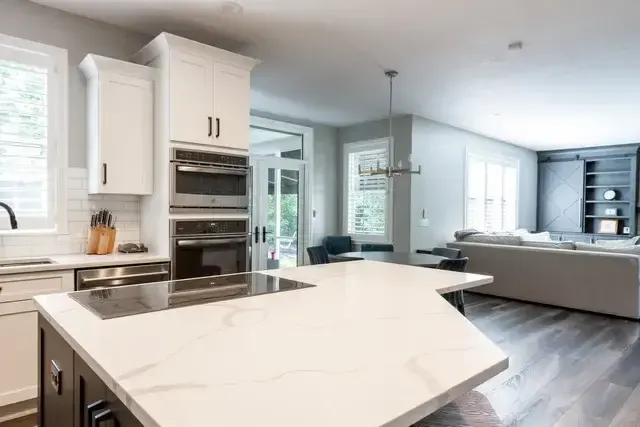
A new house is the easiest job in this trade to get wrong, because everything looks finished before it actually is. Trim gets adjusted after the walkthrough. Drywall builds up in corners in ways no drawing predicts. Order window coverings straight off the builder plan and you'll be living with the difference for years. Here's when to measure a new New Palestine build and what actually happens between the plan and the finished opening.
What a builder allowance actually buys
Most new houses arrive with window coverings included in an allowance, and it's nearly always stock product trimmed to fit at the design center. That works fine as a baseline. What it doesn't do is address darkness in a bedroom or glare in a room where somebody works, because the package is sized against the plan and the sales sheet, not against how the rooms actually get used.
Run the numbers before deciding it's enough. Stock shades and blinds run roughly $60 to $600 a window nationally, custom coverings measured and installed run roughly $250 to $2,600. An allowance built on the first figure won't carry a New Palestine house finished to the second, and that gap is where most of the surprise lives for people building new.
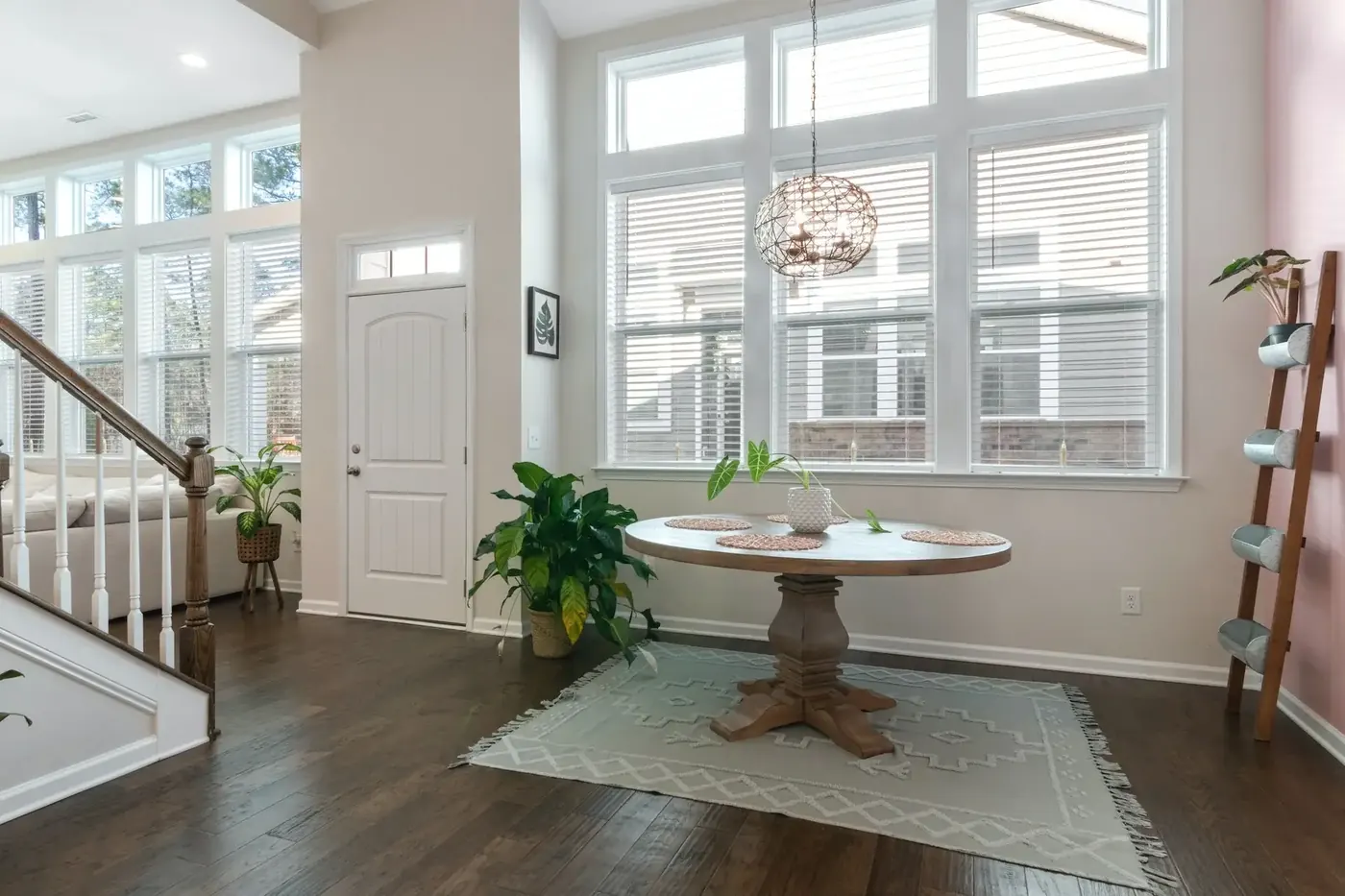
The two story great room window wall
Break a great room window wall into separate questions instead of treating it as one giant decision. In a New Palestine house, does the upper glass even need covering? A north facing wall in a comfortable room might not. A west facing wall that cooks the room every afternoon has found its whole problem right there. Whatever gets covered, nothing at that height is hand operable, so motorization is the practical choice, not an upgrade.
Battery motors run roughly $100 to $300 a window less than hardwired units, and that savings gets spent again every time a battery wand needs service, commonly about once a year, on a wall you need a lift to reach. Running power while the walls are still open is usually worth the extra step.
Very tall shades also behave worse at the edges, and one major manufacturer notes larger light gaps on shades 120 inches and taller or with a height to width ratio near four to one. Splitting the wall into an upper band and a lower band, each operated on its own, usually looks and performs better than a single oversized shade. Solar fabric is the common choice for the view, and its openness factor, roughly one to ten percent, sets how much glare control you get versus how much view you keep.
Measure the house that actually got built, not the one on the plan. Do that once the trim and paint are truly finished, and everything else follows. New Palestine Window Treatments measures on site and writes the numbers down opening by opening, then holds the order until the punch list is done. We're insured and bonded. Call (317) 999-5154 once your trim is in.
Measure the house that got built, not the plan
Nobody should order window coverings off a blueprint, because a plan dimension only describes what the framer was aiming for. Drywall thickness, corner bead, trim reveal, and paint all narrow a framed opening, paint adding a film that matters once it's stacked on top of everything else. Thirty six inches on paper rarely finishes as thirty six inches in the wall.
Measure once the walls are drywalled and trimmed and the paint has wrapped up, and hold off further if the punch list hasn't closed yet, since New Palestine builders commonly reset a casing or shim a sill during that pass. Drapery is measured later still, after finished flooring goes in, because the floor sets the hem length. Blinds and shades skip that wait, since they mount from the top down.
Trim style and mounting decide what's possible
Walk a new house and you'll find two different conditions at the windows. Some openings have full wood casing with a sill and an apron. Others have drywall returns, where the drywall itself wraps into the opening and there's no wood at all. That difference decides how a covering can mount.
An inside mount needs enough flat depth to hold a headrail, and a drywall return often has plenty. An outside mount needs something solid to screw into, and bare drywall isn't that, so it means hitting the framing above the opening or installing a mounting board first. Drapery hardware has the same problem in a heavier form, since a rod carrying real fabric pulls hard on whatever anchors it.
If the house is still open, this is the cheapest point in its life to add blocking behind the drywall for future drapery rods. It costs a New Palestine builder a few minutes and saves a real headache once the walls are closed up and painted.
Phase the house instead of doing it all at once
There's no rule that says a new house gets covered all at once, and most people shouldn't try. Start with privacy, bedrooms, bathrooms, anything at eye level from the street or a neighbor's window, and any office with a screen in view. Temporary paper shades are the cheap fix everywhere else.
Move next to the rooms you're actually living in, and order each one as a complete room rather than window by window, which keeps the fabric in a single dye lot. Save drapery and top treatments for last, they read better against furniture that already exists, and drapery specifically has to wait for finished flooring before it can be measured.
The tradeoff is dye lot risk on anything bought later. A white ordered in 2008 isn't guaranteed to match a white from two years earlier, and a New Palestine family will notice in afternoon light. Keep the product line, fabric name, color code, and mount type on file for every order so later rooms have a real shot at matching.
Frequently Asked Questions
Will custom coverings be ready when we move in?
Only if you order early enough. Custom lead times commonly run two to five weeks from the order going in, and the order can't go in until somebody has measured finished openings. If your trim and paint wrap up two weeks before closing, the math doesn't work for the whole house. The usual plan is to measure as soon as the trim is finished, order the privacy rooms first, hang inexpensive temporary shades everywhere else, and let the rest arrive on its own schedule.
If I finish rooms later, will everything still match?
Only if you keep records. Fabrics and painted finishes are produced in batches, so a white ordered in 2008 won't necessarily match a white ordered a year and a half later, and the difference shows in afternoon light. Ask for the product line, the fabric name, the color code, and the mount type to be written on every order, and keep a copy. Also order any single room complete rather than one window at a time, since matching within a room matters far more than matching between floors.
Do we need to run electrical for motorized shades on the great room wall?
If the walls are still open, it's worth doing. Battery motors run roughly $100 to $300 a window less than hardwired ones, but battery wands commonly need service about once a year, and a wall that tall usually needs a lift just to reach them. Hardwiring while the framing is exposed avoids that recurring chore for good. If the walls are already closed, battery power is still a completely workable answer, just budget for the yearly maintenance.
 How to Childproof the Blinds You Already Have in New Palestine
 Custom Shutters for Odd-Shaped Windows in New Palestine
 Stain and Cord Mistakes That Damage New Palestine Window Treatments